Tobishima Kaido Cycling: Seven Islands West of the Shimanami
The Tobishima Kaido links seven islands where Japan's first lemons grew, on bridges free for bikes, reached by a boat or a train that sets your day.
Don't want to read all this?
We've planned 800+ cycling trips. Send your dates, fitness and group size — we'll map the route and book every night.


What Is the Tobishima Kaido?
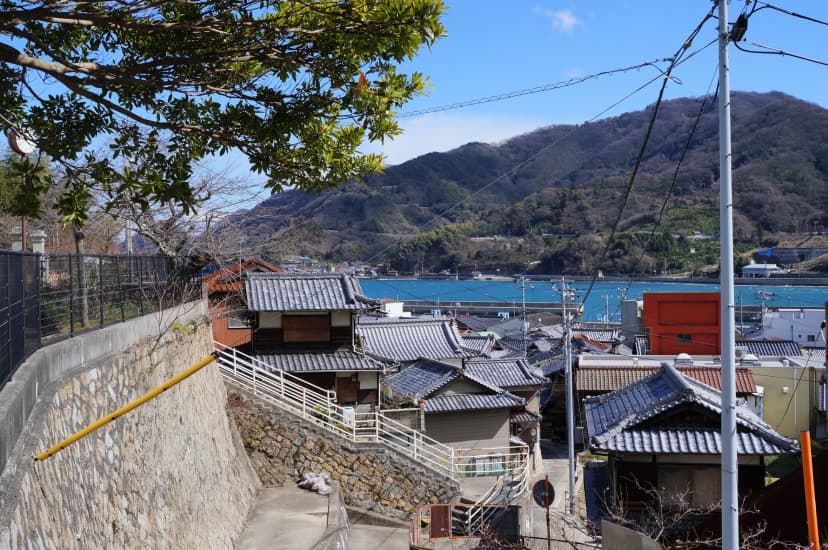
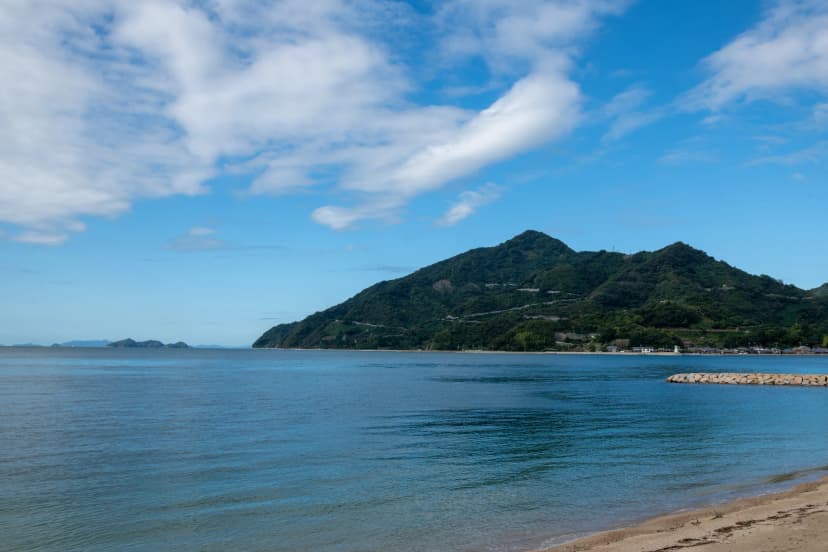
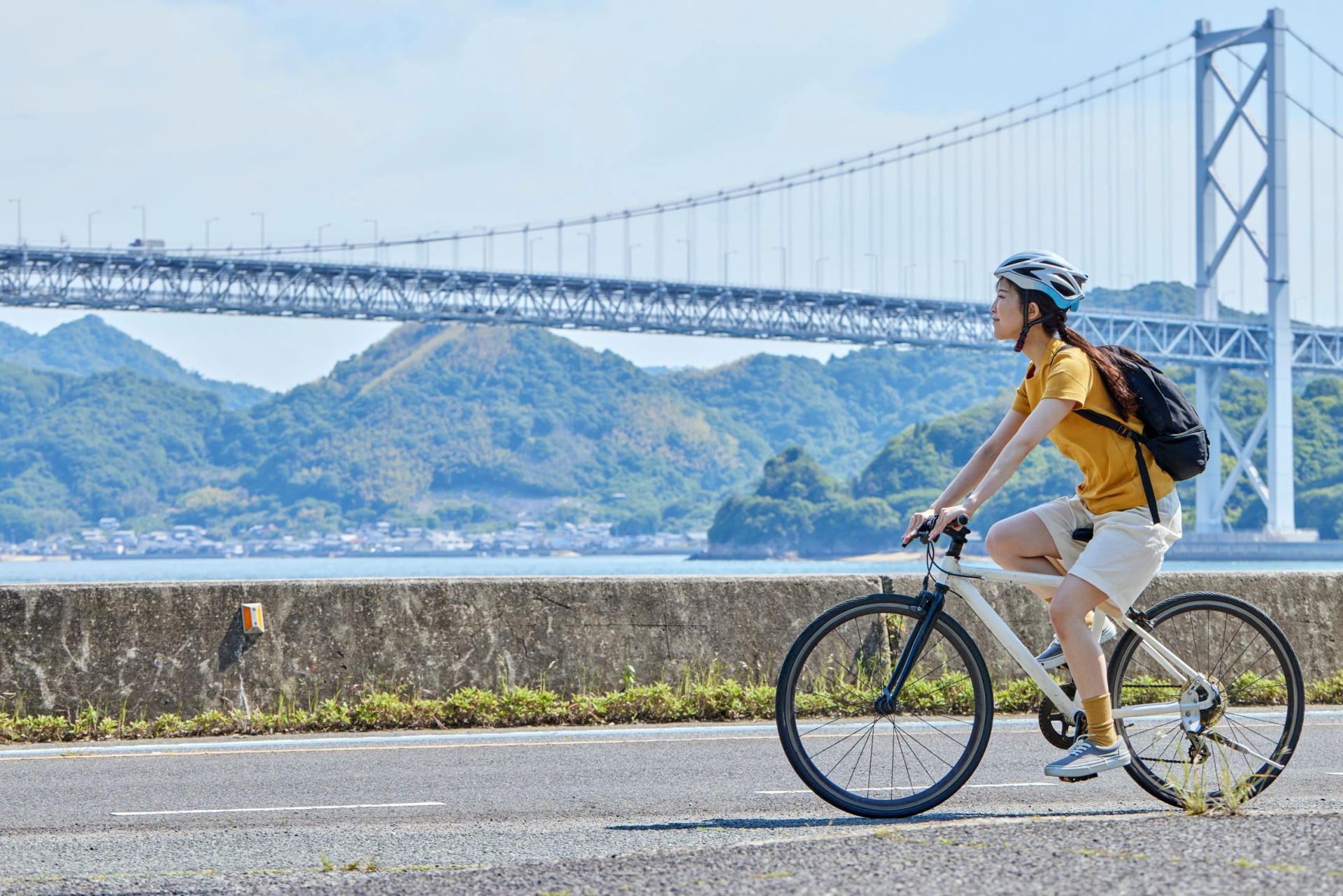
The Tobishima Kaido is a cycling road across the Aki Nada islands of the Seto Inland Sea: seven islands joined by seven bridges, from the Hiroshima coast near Kure to Okamura, just over the line in Ehime. The name pictures the islands as stepping stones in a garden, and the route runs parallel to the better-known Shimanami Kaido, a short boat ride to the east.
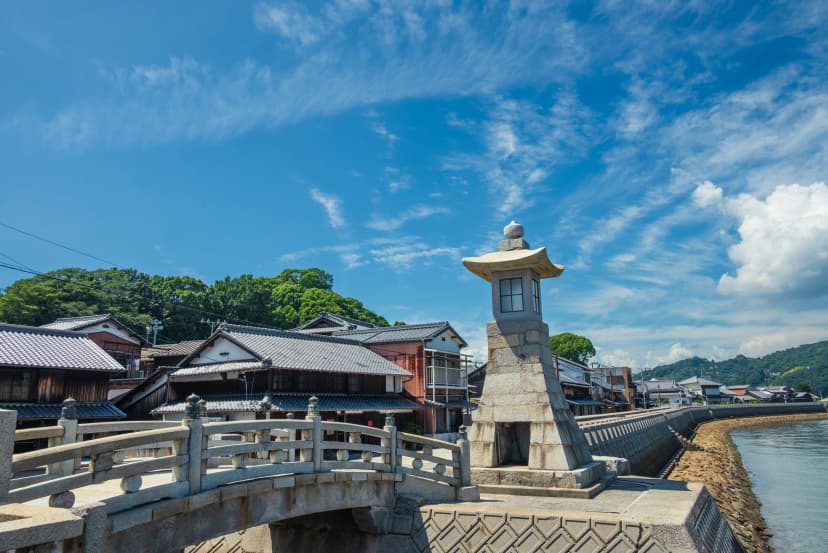
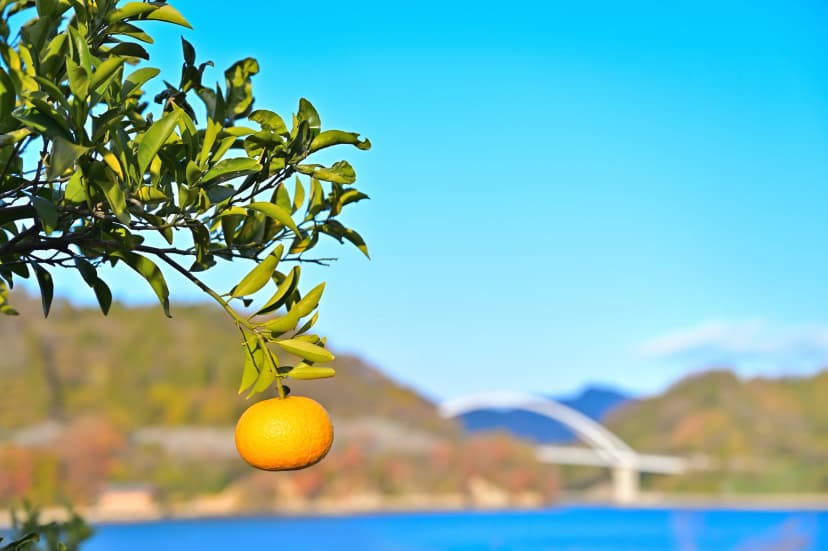
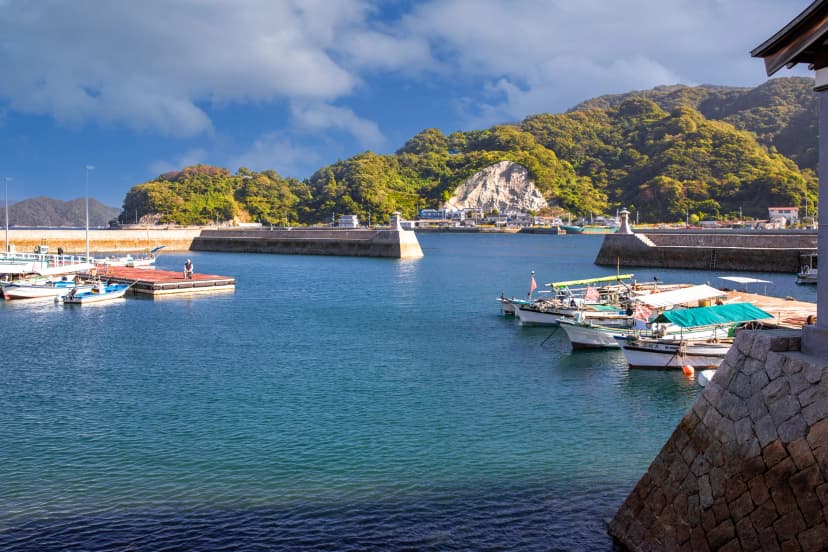
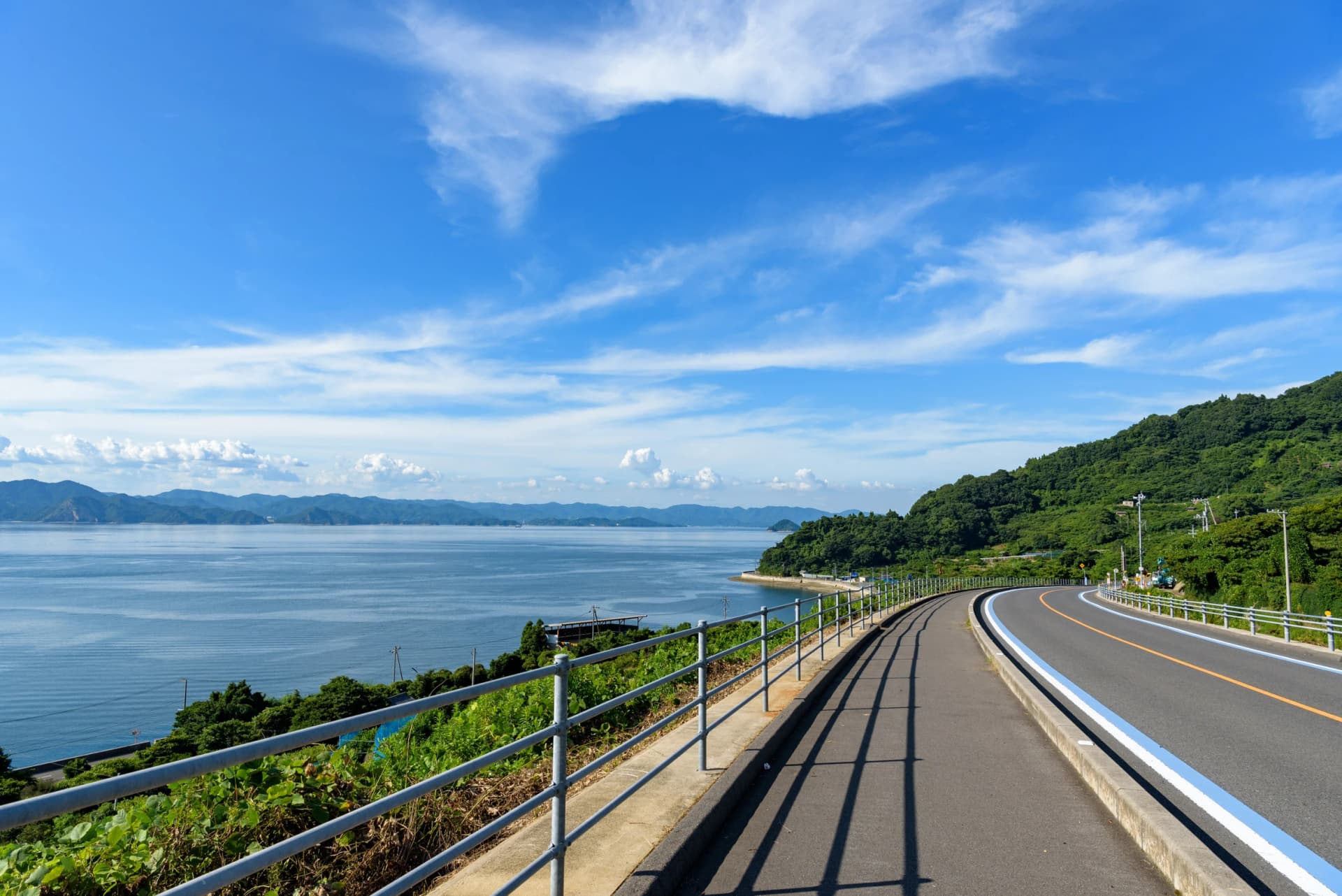
People ride it for the quiet. The road keeps low along the shore, past fishing harbours and citrus terraces, with far fewer riders than its famous neighbour, and it is known for Mitarai, an Edo-period port town, and for Ōchō, which Kure calls the birthplace of Japanese lemons. The boats and trains at each end decide your day, and the bus that once linked the islands to Hiroshima is gone. This guide is for riders who plan it themselves, as a day ride or with a night out on the islands.
Four Lengths for One Route
Look up the Tobishima Kaido's length and you get 30, 46, 80 or 96 km. Each is right for a different ride.
The official cycling road is about 31 km, from Kawajiri on the Hiroshima coast to Okamura port, as Hiroshima prefecture set it in 2012. Markings every kilometre count the distance to Kawajiri or Okamura. JNTO rounds this to 30 km, and Kure city quotes about 80 km for there and back. The prefecture's road company gives 46.5 km for a round course and about 96 km for the full coast of every island.
Our own line is 55 km, from Okamura port to JR Aki-Kawajiri station by way of Mitarai, Ōsakishimojima's south coast and Kenmin no Hama, measured on our GPS track.
The Tobishima Kaido in figures | |
Islands | Six in Kure, Hiroshima, and Okamura in Imabari, Ehime |
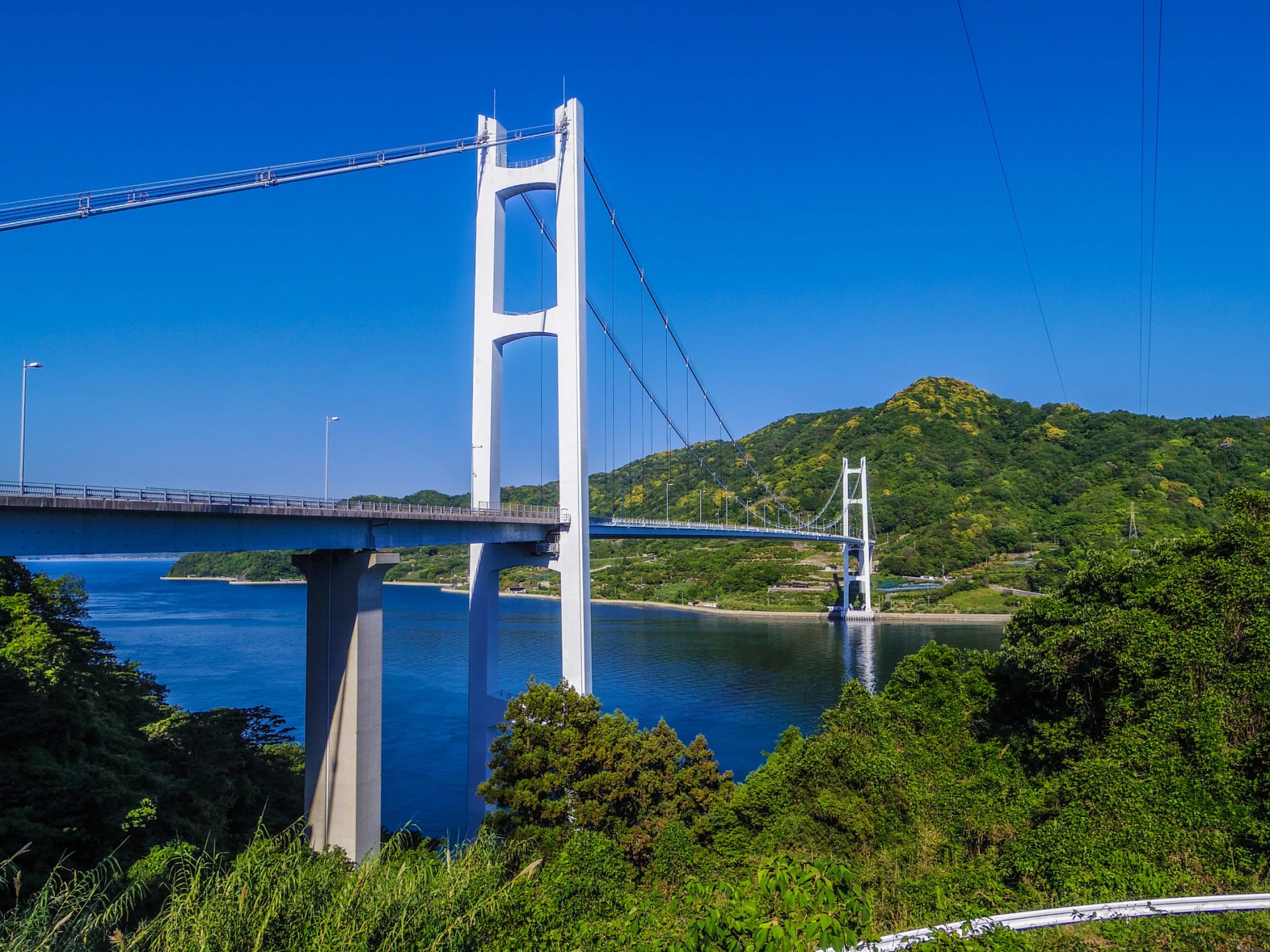
Bridges | About 3.7 km of bridge in all |
Tolls for bikes | None, the Akinada Bridge included |
Blue line | Painted on 18 of the 27 km in Hiroshima |
Complete since | November 2008, when the Toyoshima Bridge opened |
Tools and a pump | Lent at five rest stops, Sannose to Ōchō |
Tobishima Kaido Map
Compare the map's two colours before you plan anything: blue is the official cycling road, and orange marks the detours on our line, down to Mitarai's harbour, round the south coast and onto the beach. Tap a port or a station to see what sails or runs from it.
Pick Your End First
Most of the planning is getting on and off the islands. Settle that, and the riding fits in between.
By Train to the Akinada Bridge
The JR Kure Line follows the Hiroshima coast to Nigata and Aki-Kawajiri, the two stations either side of the Akinada Bridge; JNTO puts Hiroshima to Nigata at 50 minutes. Fewer trains run straight through since the 2024 and 2025 timetable changes, so expect to change at Hiro. Check times on JR West.
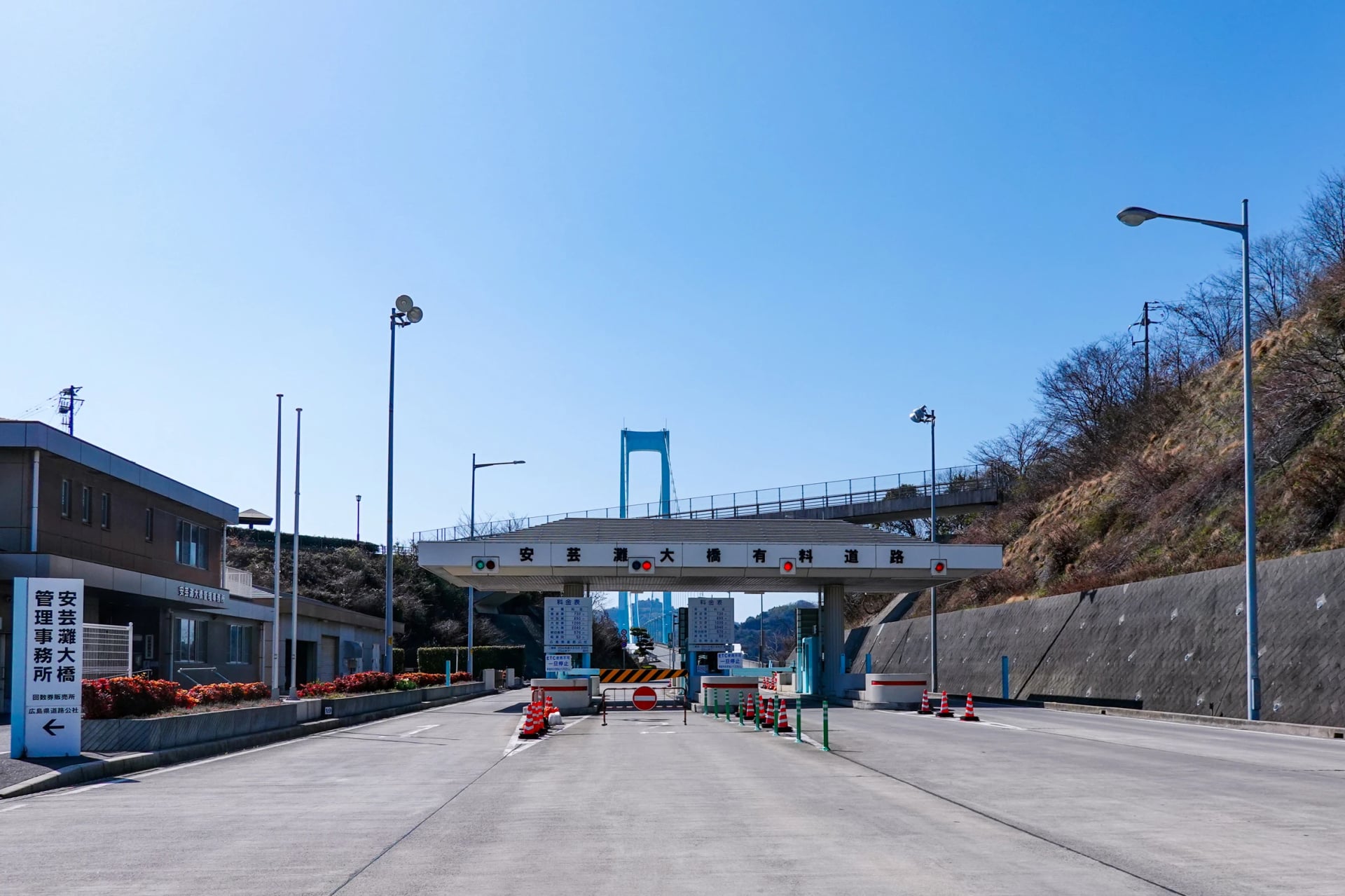
The Akinada Bridge costs a bike nothing. Ride past the toll booth, which only charges cars. Without a bike of your own, Cottage Kajigahama rents bikes and e-bikes from a branch by Aki-Kawajiri station and will collect them at Okamura port, so you can ride one way. Its e-bikes are day hires only, as they can't be recharged overnight.
By City Boat From Imabari
Imabari city runs two boats to Okamura. The passenger boat Tobishima sails every day, leaving Imabari at 7:20, 9:30, 15:30 and 19:00 for a 58-minute crossing, with room for 8 bikes. The car ferry Daini Sekizen takes 10 to 15 bikes. Since 1 April 2026, for lack of crew, the ferry has not sailed on Mondays or Thursdays.
Neither boat takes bookings, so be at the port early. The crew strap the bikes down and may ask you to lift bags off a rear rack. The times here are from Imabari city's timetable of April 2026; check them again the week you go.
Coming off the Shimanami bridges? Our Shimanami Kaido cycling guide covers the ride down to Imabari.
By Ferry From Ōmishima
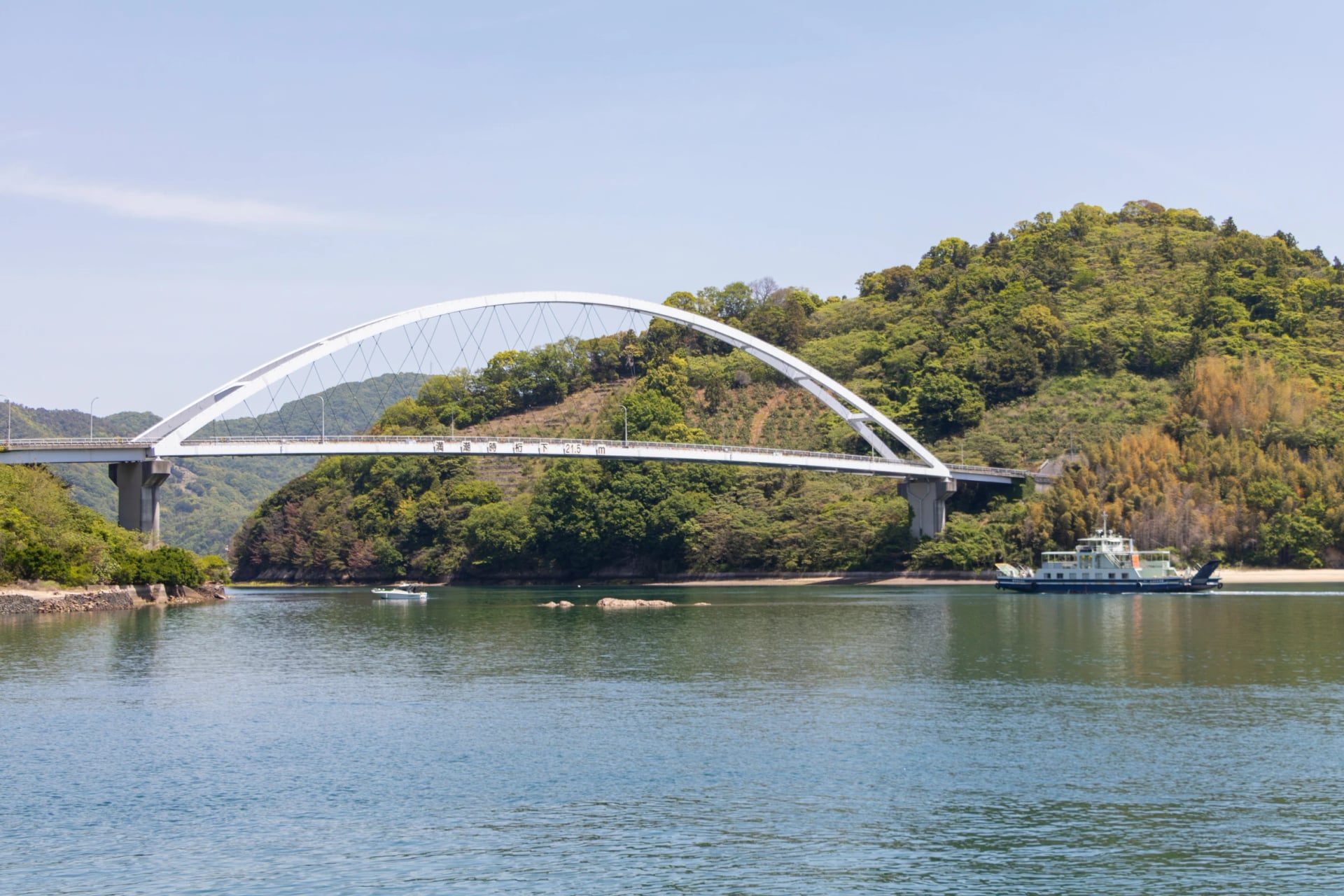
Already on Ōmishima? Skip Imabari. The Ōmishima Blue Line ferry takes bikes too: Munakata port to Okamura is 23 minutes, five times a day between 8:50 and 17:40, and the city's passenger boat calls at Munakata too.
Riding end to end means a train at one end and a boat at the other. No through bus runs to Hiroshima any more: the Tobishima Liner was withdrawn in March 2024, so plan on riding the whole way, bags included.
Seasons on the Islands
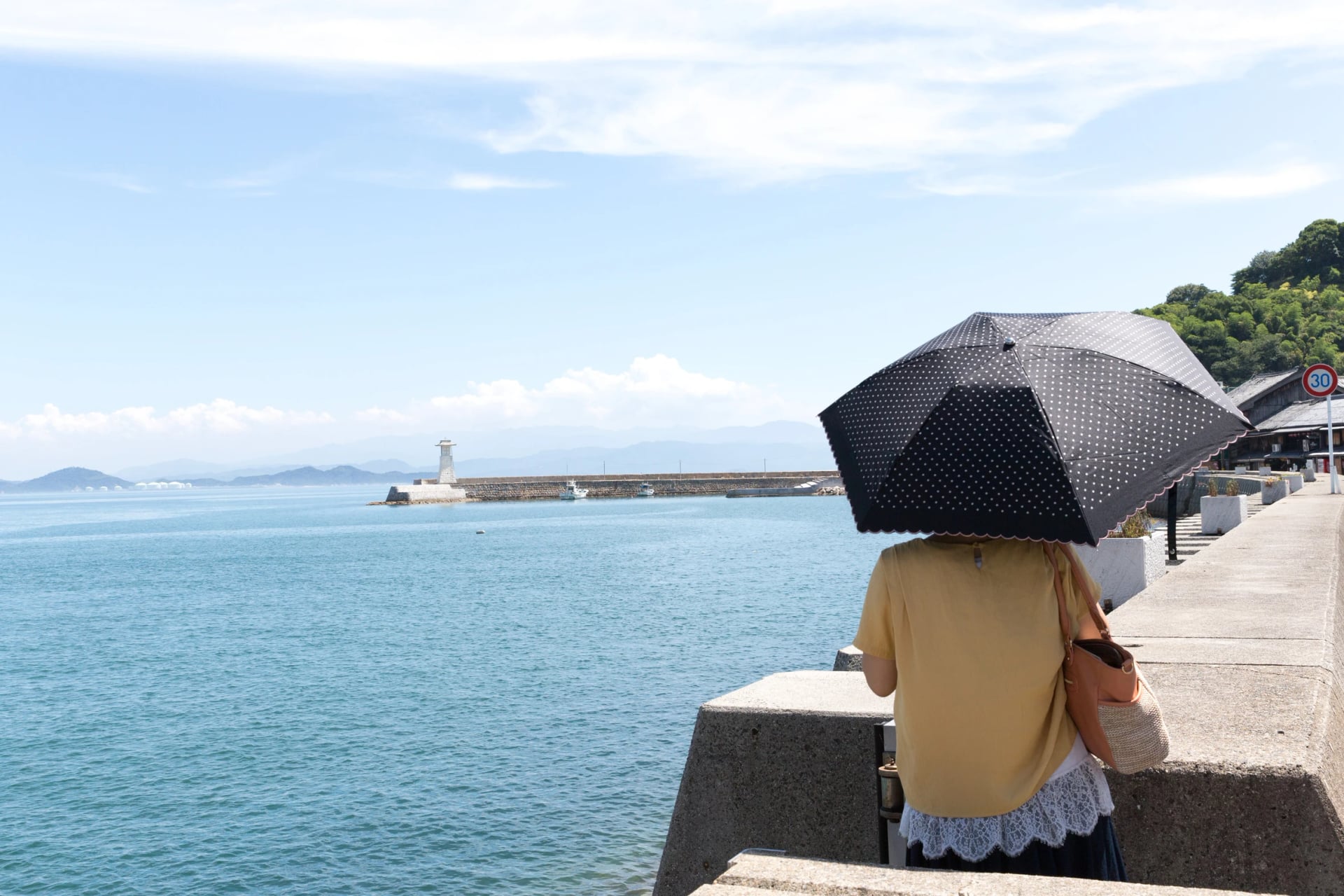
Spring and autumn are the best seasons here. April and May bring daytime highs of 19 to 23 °C in Kure and blossom on the citrus terraces, while October and November are drier, at 23 and 17 °C. June and July are the wettest months, and the rainy season usually ends around 19 July. August averages 32 °C, so start early, and typhoons are likeliest in late summer and early autumn, when the boats can stop. Winter days stay near 10 °C: quiet roads, with lemons ripening on the trees.
Season | Daytime highs in Kure | On the islands |
Spring, March to May | 14 to 23 °C | Citrus blossom in May |
Summer, June to August | 26 to 32 °C | Rainy season, then heat |
Autumn, September to November | 28 down to 17 °C | Typhoon risk early, then clear days |
Winter, December to February | 10 to 12 °C | Lemon harvest, quiet roads |
Sleeping on the Islands
The islands have few beds, and the two we use are not on Booking.com. Tobishima-kan, by the port at Ōchō, has six twin rooms with their own bathrooms and sells through Japanese booking sites. The Kagayaki no Yakata lodge at Kenmin no Hama looks out to sea from every room, and its annex has a sea-view hot spring. Mitarai adds a few guesthouses. Book the beds before the boats and trains: they are the part that runs out.
Five Checks Before You Ride
Match the boat to your weekday before booking anything else.
The last direct boat from Okamura to Imabari leaves at 17:35, every day. Miss it, and the 18:05 ferry to Ōmishima connects on to Imabari, arriving 19:55. Going the other way, the last boat leaves Imabari at 19:00 and reaches Okamura at 19:58.
Carry lunch and water from the start. Shops are few and some island grocers close at weekends; the rest stops lend tools but sell little.
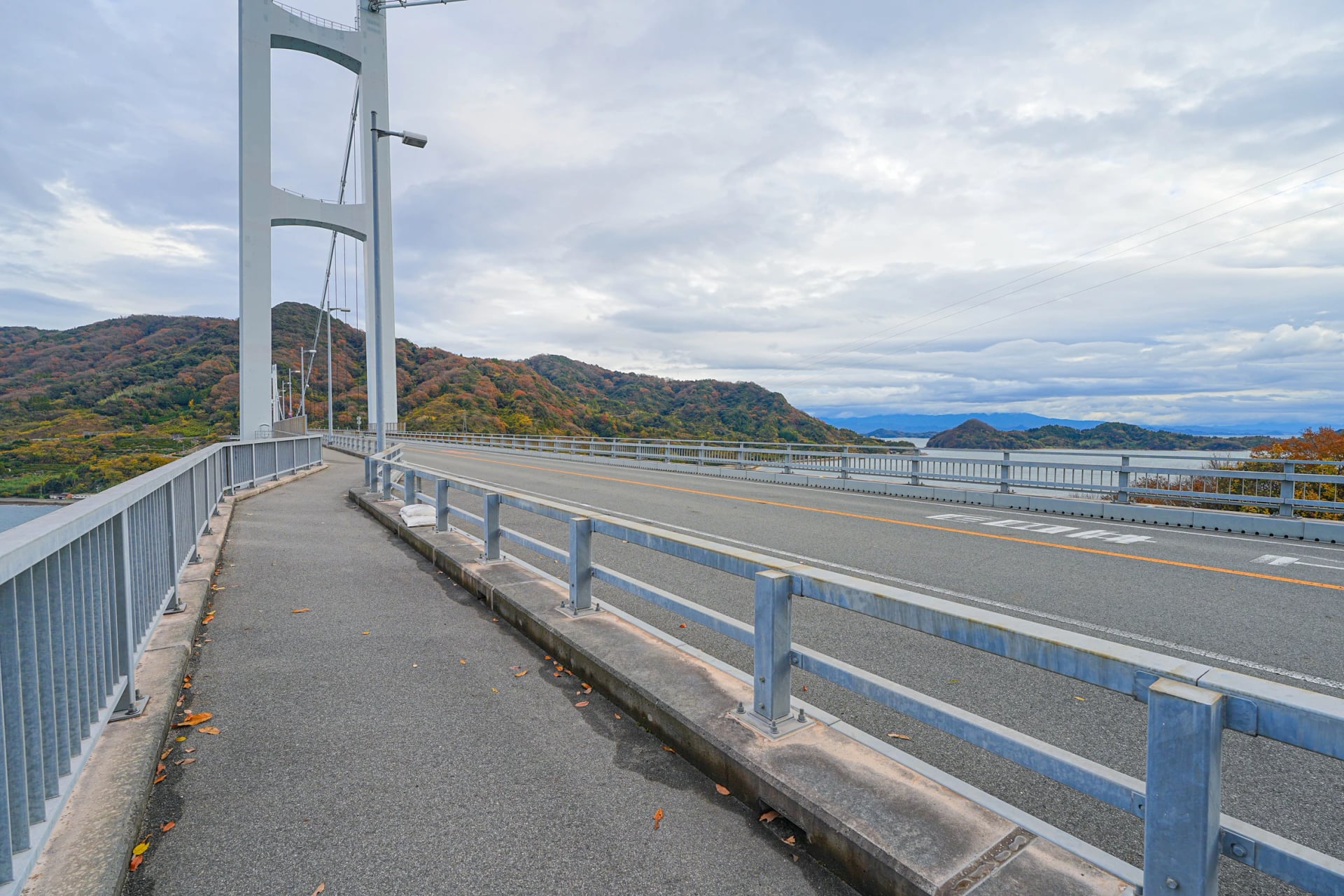
Read the forecast the night before. Strong wind shuts the Toyoshima Bridge to walkers and two-wheelers once the 10-minute average reaches 15 m/s, and its only footway runs along one side. The Ōmishima ferry stops at 20 m/s, and Imabari city posts boat cancellations on its X account, @sekizentosen.
Three sights close on Tuesdays: Shōtōen, the Mitarai rest area and Kure's Yamato Museum. Last winter the rest area also shut from 29 December to 3 January.
Two Island Chains, One Booking
Doing both chains in one trip turns on three things: a boat that sails on your weekday, island beds that sell out first, and one bike that crosses the water with you. Our tour plans the boat day around the weekday, books the island inns, and puts one e-bike on the boat with you that stays yours from Onomichi to the last bridge. See the tour:
Want a night in Mitarai, a different start or your own bike? Put it on the inquiry form and an agent will build the trip around it. Rather talk first? Book a call.
Frequently Asked Questions



Plan with a travel expert
Free advice from a team that knows these routes inside out - real people, not a bot

Hassle-Free
We handle itineraries, accommodations, and anything else you prefer not to deal with, so you can enjoy a carefree holiday.

Tried & Tested Adventures
Our cycling routes are hand-picked & tested, to ensure breathtaking landscapes, smooth roads, and maximum safety - giving you the perfect ride every day.

Unbeatable Support
Our customer support is where we show our passion, ensuring your cycling holiday runs smoothly and your well-being is always our top priority.

Book with Confidence
We are a financially protected company, fully bonded and insured, keeping your money safe and allowing you to travel with confidence.